Solar panels for weather stations and agriculture sensors must support reliable measurement through changing seasons, crop growth, dust, rain, temperature, and long periods without maintenance. The panel cannot be selected only from the sensor’s average current because communication, valve operation, sensor warm-up, data logging, and charging losses also affect the energy budget.
A custom monocrystalline module can fit compact field equipment, but dependable operation requires coordinated electrical, mechanical, and environmental design.
List Every Device and Operating State
A field node may include soil-moisture probes, temperature and humidity sensors, pressure sensors, rain gauges, water-level sensors, flow meters, cameras, GNSS, data loggers, radios, displays, relays, or small valves.
Measure sleep, sensing, warm-up, processing, logging, transmission, retries, and actuator operation. Some gas or air-quality sensors need a meaningful warm-up period. A rain event or irrigation cycle may create a load that is absent during a short bench test.
Separate Monitoring Loads From Control Loads
Passive sensing and occasional radio transmission may require relatively little energy. Pump control, valve actuation, displays, heaters, and continuous gateways can change the system scale.
If a node controls equipment, define the actuator energy, activation frequency, inrush current, and safety behavior when the battery is low. The battery must supply the peak, while the solar panel must recover the energy over time.
Use Seasonal Solar Data
Agricultural products operate through changes in day length, cloud cover, crop canopy, irrigation, and dust. Size the system for the most demanding relevant season, not the annual best case.
Consider whether the field device remains in place after crop growth or is moved between seasons. Vegetation that is absent during installation can later shade the module. In orchards or greenhouses, direct sun assumptions may be unrealistic.
Choose the Installation Position Carefully
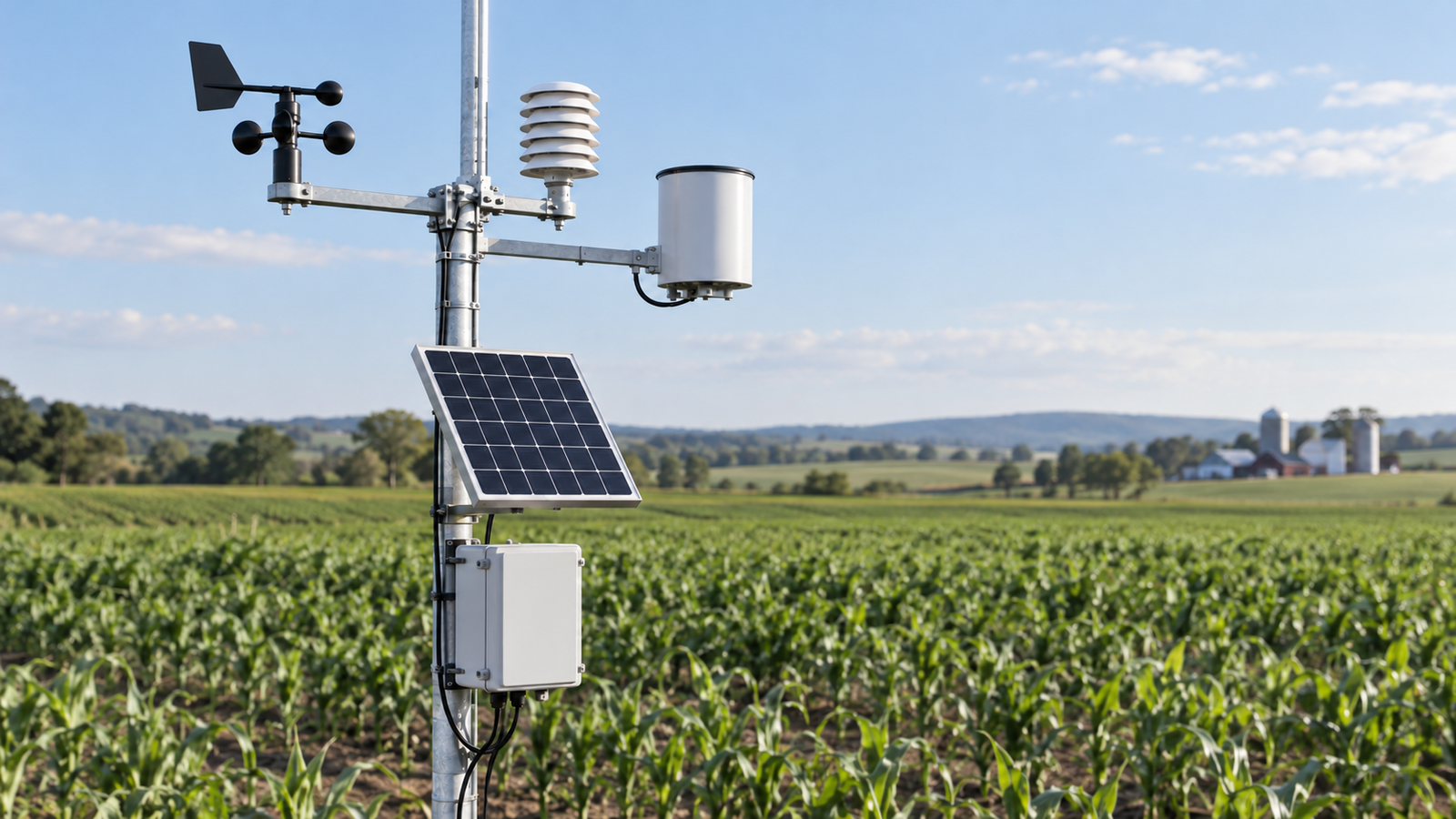
The panel should receive useful light without compromising the measurement. A weather station needs representative airflow and temperature exposure; placing the electronics or panel incorrectly can create heat or shade that affects sensors.
Review pole height, tilt, compass direction, crop rows, nearby structures, irrigation spray, maintenance access, and cable route. The mounting system should discourage unintended rotation or downward tilt.
Plan for Dust, Mud, Water, and Chemicals
Field modules may encounter soil dust, fertilizer, pesticides, salt, bird activity, and mineral deposits from irrigation water. These can reduce light transmission or affect materials.
Define cleaning method and realistic service interval. Select the complete laminate, edge construction, cable, connector, and mounting hardware around the exposure. Do not assign a chemical-resistance or ingress claim without appropriate product-level evidence.
Match Voltage to the Power Electronics
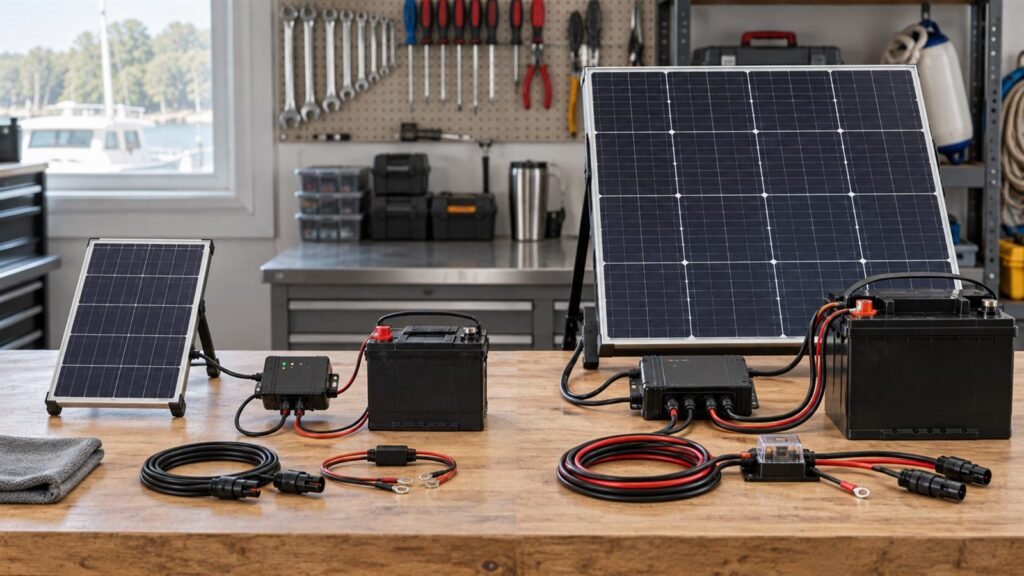
Provide the charging IC, battery chemistry, input operating range, maximum input voltage, and cold-start behavior. Custom cell arrangement can tune voltage and current within the available dimensions.
Check cable drop if the panel is mounted above or away from the sensor enclosure. Measure at the charger input during realistic illumination.
Size Storage for Weather and Service Access
Remote devices may remain unattended for weeks or months. Define how many low-sun days the node must survive and whether data loss, missed alarms, or control failure is acceptable.
Account for allowable depth of discharge, low-temperature performance, aging, self-discharge, and peak current. A large battery improves autonomy but cannot correct a long-term mismatch between harvested and consumed energy.
Use a Module That Fits the Field Hardware
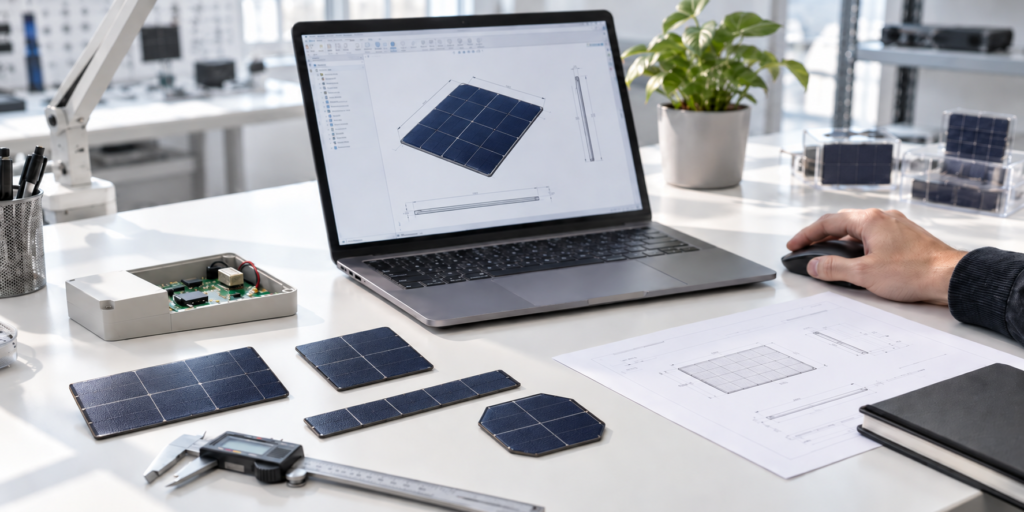
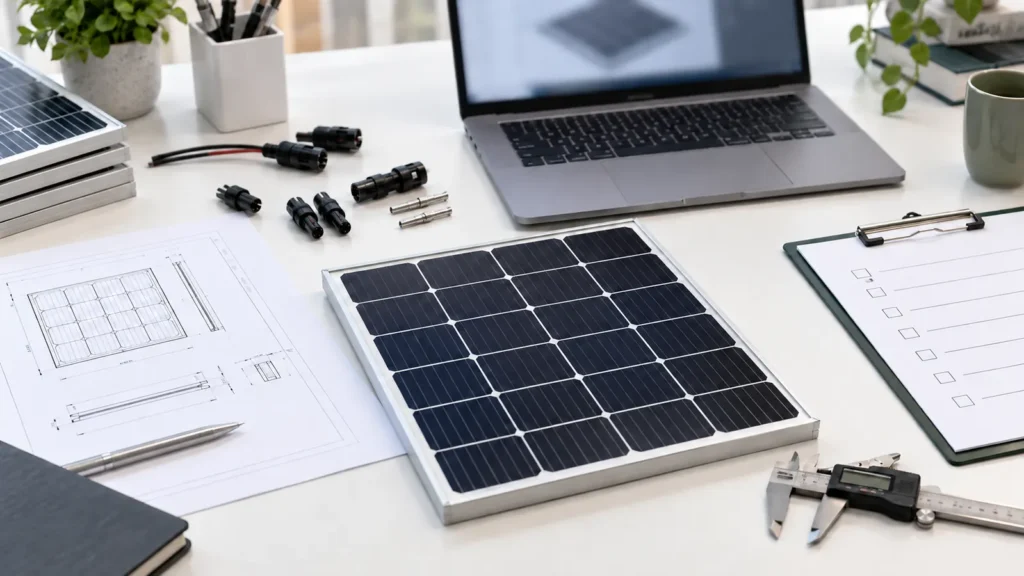
Available mounting area may be a narrow enclosure lid, pole bracket, sensor shield, or separate plate. Share a dimensioned drawing, desired tilt, cable exit, connector, fasteners, and expected wind or vibration.
A custom small solar panel can be designed around the electrical window and mechanical footprint. Monocrystalline cells are often considered where outdoor power must be collected from a compact area, but the finished module still requires field validation.
Design for Communication Conditions
LoRaWAN, NB-IoT, LTE-M, cellular, satellite, and proprietary radios have different energy profiles. Weak coverage can extend radio-on time and cause retries. A gateway or repeater usually consumes more energy than an end sensor.
Measure energy at representative range and signal strength. Firmware can batch readings, reduce retries, and adapt reporting frequency when stored energy is low.
Consider Sensor Accuracy and Thermal Effects
A dark panel and enclosure can become hot in direct sunlight. Heat conducted or radiated toward temperature sensors may bias readings. Separate sensitive sensors from the solar module and battery where necessary.
Test the assembled product, not only the electronics on an open bench. Verify that panel orientation, enclosure ventilation, and mounting hardware do not compromise the measurement objective.
Prototype Through a Full Environmental Cycle
Bench testing should confirm load energy, charging behavior, polarity, and electrical margin. Field testing should cover representative sun, cloud, rain, crop growth, communications, and temperature.
Log battery state, panel voltage and current, daily harvested energy, communication retries, sensor duty cycles, and maintenance events. A gradual decline across repeated days is more important than a single successful reading.
Project Input Checklist
- Sensor, logger, radio, and actuator inventory
- Measured energy for normal and high-activity days
- Battery and charging-circuit details
- Required low-sun autonomy
- Site location, season, shading, and crop conditions
- Module dimensions, tilt, and mounting structure
- Cable length, connector, and polarity
- Dust, water, chemical, temperature, and vibration exposure
- Maintenance and cleaning interval
Frequently Asked Questions
Can a small solar panel power a weather station?
Yes, when the station’s measured energy, communication load, local solar resource, storage, and system losses support a positive long-term energy balance.
How should the panel be oriented?
Orientation depends on location, season, mounting constraints, and shading. Use the least favorable relevant conditions and prevent the mount from moving unintentionally.
Will dust significantly affect a small module?
Dust and deposits can reduce output, especially when the module is small or mounted at a shallow angle. Include cleaning and soiling in the design assumptions.
Can one panel design serve every field location?
Not always. Different latitude, shading, communications, crop canopy, and maintenance access may require different module or storage configurations.
Should a gateway use the same system as a sensor node?
Usually not without calculation. Gateways often have much higher continuous communication and processing loads.
Design for the Field, Not the Bench
A dependable agricultural or environmental node starts with measured loads, seasonal light assumptions, suitable storage, and a module mounted where it can remain clean and illuminated. Field data should validate the final design before production.
Review SiborTech’s agriculture and environmental monitoring applications. To evaluate a sensor node, installation drawing, and energy budget, discuss your field monitoring project.