A tractor parked between seasons presents a different charging problem from a machine working every day. The battery still loses stored energy, while tracking devices, control modules or alarms may remain connected. Choosing a solar maintainer for agricultural equipment starts with those storage conditions and loads, rather than the engine size or a panel wattage printed on a catalogue.
This guide is for equipment brands, distributors and fleet teams preparing a maintenance accessory. It addresses parked machinery; a small maintenance panel is not a substitute for diagnosing a failing battery, restoring a deeply discharged battery or supplying a machine’s working loads.
Map the actual storage arrangement
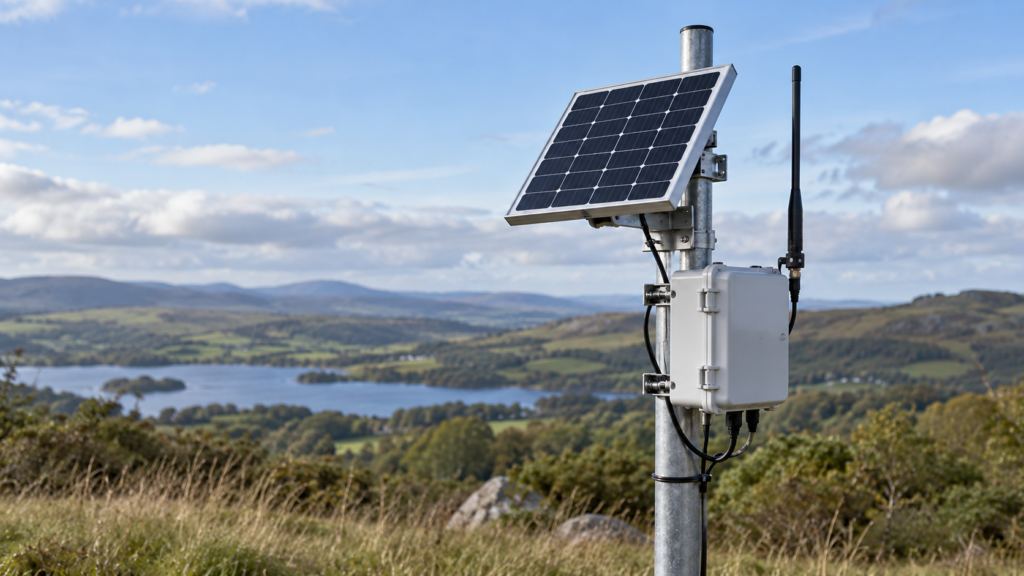
Separate outdoor yards, open-sided shelters and enclosed sheds. Record where the panel can receive useful daylight while the equipment is parked. A panel left under a roof or against a shaded windscreen may contribute little even when the surrounding yard is bright. Dust, crop residue and seasonal changes in sunlight also belong in the installation assessment.
If several machines share one storage area, make a location record for each installation type. Avoid approving the fleet from a single convenient demonstration position. A removable external panel may require a different mounting and cable arrangement from a panel that remains on the machine.
Measure the standby load before selecting output
Identify which circuits remain powered after the equipment enters its normal sleep state. A telematics unit that transmits periodically creates a different profile from a steady background current. Have a competent technician measure representative parked operation without interrupting equipment settings or bypassing required protection.
Estimate daily energy use from the measured load profile, then compare it with energy delivered to the battery under representative seasonal conditions. Include controller consumption and conversion losses. Keep battery self-discharge separate from electrical loads so neither is omitted or counted twice. Rated panel power alone does not establish the daily maintenance capability.
Confirm the battery and charging path
Record chemistry, nominal system voltage, battery arrangement and the manufacturer’s storage instructions. Do not assume every tractor uses one 12 V battery or that the same charging profile suits flooded lead-acid, AGM and lithium products. The controller, battery management system and low-temperature charging behaviour must suit the actual battery.
Trojan’s lead-acid maintenance guidance calls for charging before storage and monitoring during storage. Lithium products require their own instructions; the Victron Lithium Battery Smart manual illustrates why charging permissions and temperature limits must be checked for the specific model. Neither source is a universal setting sheet for agricultural batteries.
Review access, isolation and operator handling
A battery isolator can disconnect the charging path as well as unwanted loads. Check the proposed connection in the actual stored configuration, following the equipment maker’s instructions. An accessory socket may be switched off with the ignition. A connection that works during a demonstration may therefore stop working once the operator parks and isolates the machine.
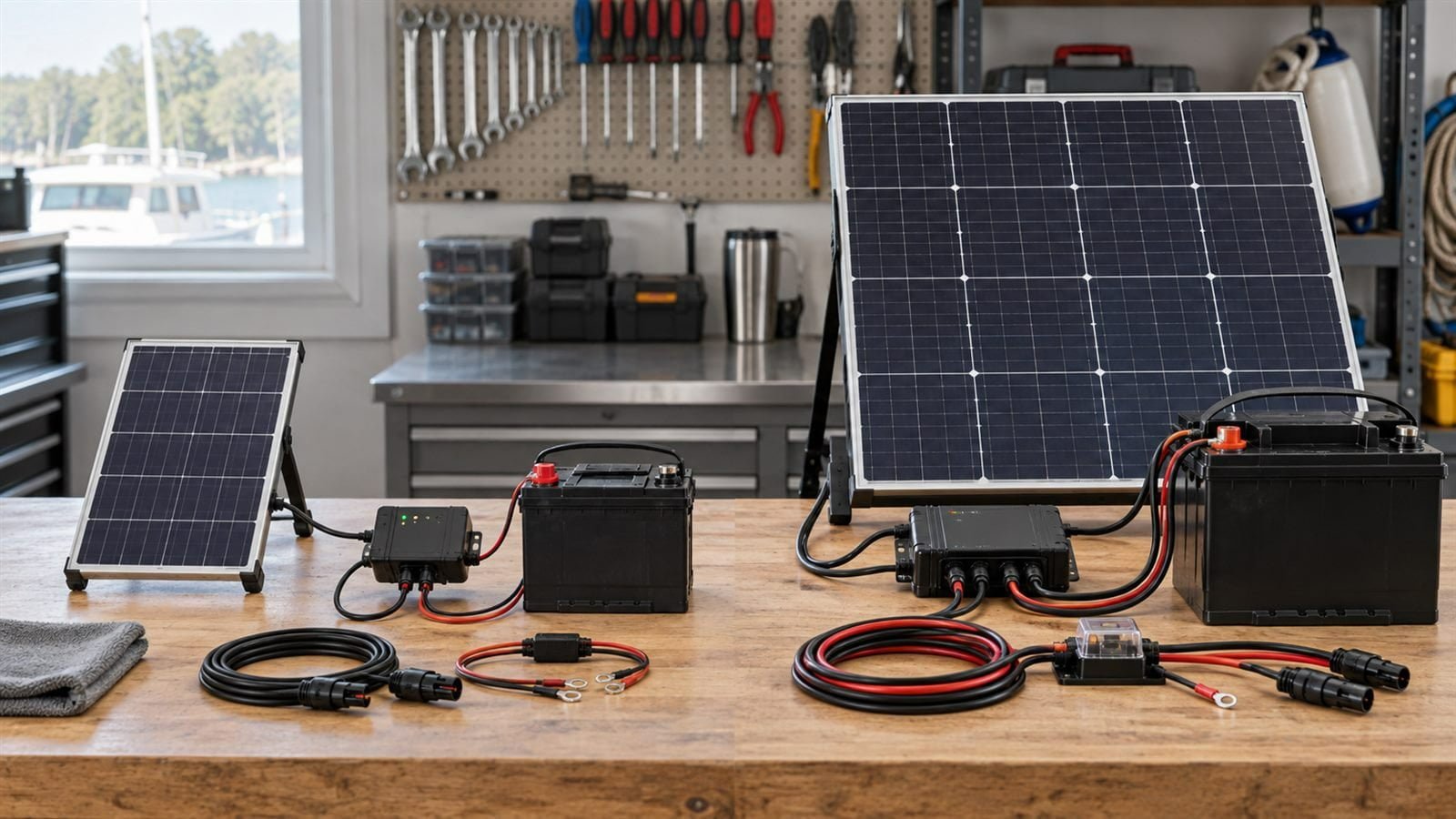
Specify protected routing, strain relief, suitable circuit protection and a clear removal procedure before operation. Keep cables away from moving parts, hot surfaces and access steps. Where staff move equipment between sheds and yards, include a visible check that an external panel and its cable have been removed or secured.
Approve a representative seasonal trial
Use a trial that represents the intended storage season, location and equipment state. Log battery condition, charging behaviour, maintenance actions and periods without useful light. Define the acceptable battery condition and the inspection interval with the battery and equipment requirements before the trial starts.
The following decision record helps distinguish a charging shortfall from a disconnected installation. It is a proposed trial framework, not measured performance for a SiborTech model.
| Observation | Check before changing panel size |
|---|---|
| Battery condition declines | Measured loads, battery health and actual light exposure |
| Panel is illuminated but no charge reaches battery | Isolation state, controller status and protected connection path |
| Some machines pass and others fail | Storage position, equipment configuration and operator procedure |
| Performance worsens during storage season | Shade, residue, weather and inspection records |
Prepare the OEM selection brief
Send us the battery information, measured standby profile, storage photographs, mounting area, cable route and intended sales market. Our solar battery charger and maintainer range provides a starting point for discussing the panel and connection configuration. Confirm the controller and compatibility for the quoted variant rather than assuming all options are included.
For a general vehicle baseline, see our parked-vehicle maintainer guide. For a tractor or machinery accessory project, share your storage and battery requirements so we can review the application before sample selection.