A solar battery maintainer for a parked vehicle should be selected around the battery and storage conditions, rather than a wattage label alone. A car parked outside every day presents a different problem from a vehicle kept under a cover or inside a garage. We begin with what the battery must support while parked and where the solar panel can receive useful light.
This guide concerns maintenance charging during storage. It does not provide a procedure for recovering a damaged or deeply discharged battery. For that situation, follow the battery manufacturer’s assessment and charging instructions before choosing a maintenance system.
Start with the battery specification
Record battery chemistry, nominal system voltage, capacity, condition and the vehicle manufacturer’s charging requirements. A connector marked for a particular nominal voltage does not establish battery compatibility. The charging profile, protection and operating limits must suit the actual battery.
Also establish whether the vehicle has designated charging points, battery monitoring or restrictions on accessory charging. The recommended connection may differ from a direct connection to the battery terminals. We ask for the vehicle or equipment documentation rather than assuming that one arrangement suits every model.
Separate maintenance from recovery
A maintainer is normally considered when the aim is to offset storage losses and parked electrical demand. A starter battery that already fails a condition check needs investigation. Adding solar input does not diagnose an ageing battery, an abnormal parasitic load or a charging-system fault.
Describe the starting condition in the project brief: healthy battery entering seasonal storage, equipment used occasionally, or a vehicle with an unresolved drain. Those are different requirements and should not be combined into one promise of “keeping every battery charged”.
Understand the parked load
Alarms, tracking devices, control modules and accessories can draw energy while the engine is off. The relevant quantity is their combined demand over the storage period. Measurements should reflect the vehicle’s actual sleep behaviour; a reading taken immediately after locking may not represent its settled parked state.
Have a qualified person measure the demand using a method suitable for the vehicle. Record accessories that remain connected and any unusually frequent wake-up activity. If the demand is uncertain, treat the proposed solar setup as a trial rather than an assured energy balance.
Assess light where the panel will sit
Consider the exact parking position, season, orientation, nearby buildings and whether the panel is behind glass. A dashboard location may be convenient but also introduce tint, reflections, shading and high temperatures. Do not apply an outdoor panel rating directly to that installation.
Ask how long the vehicle may remain covered, moved into shade or parked indoors. Solar maintenance requires useful light. A larger nameplate rating cannot compensate for a location that receives none. Where lighting is unpredictable, plan an alternative maintenance procedure.
Confirm charging control and connection
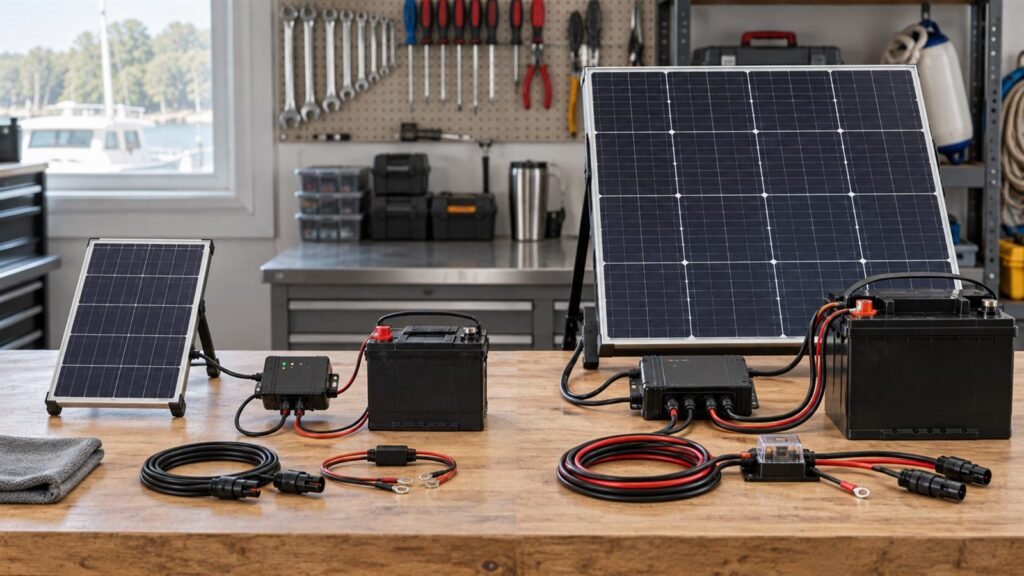
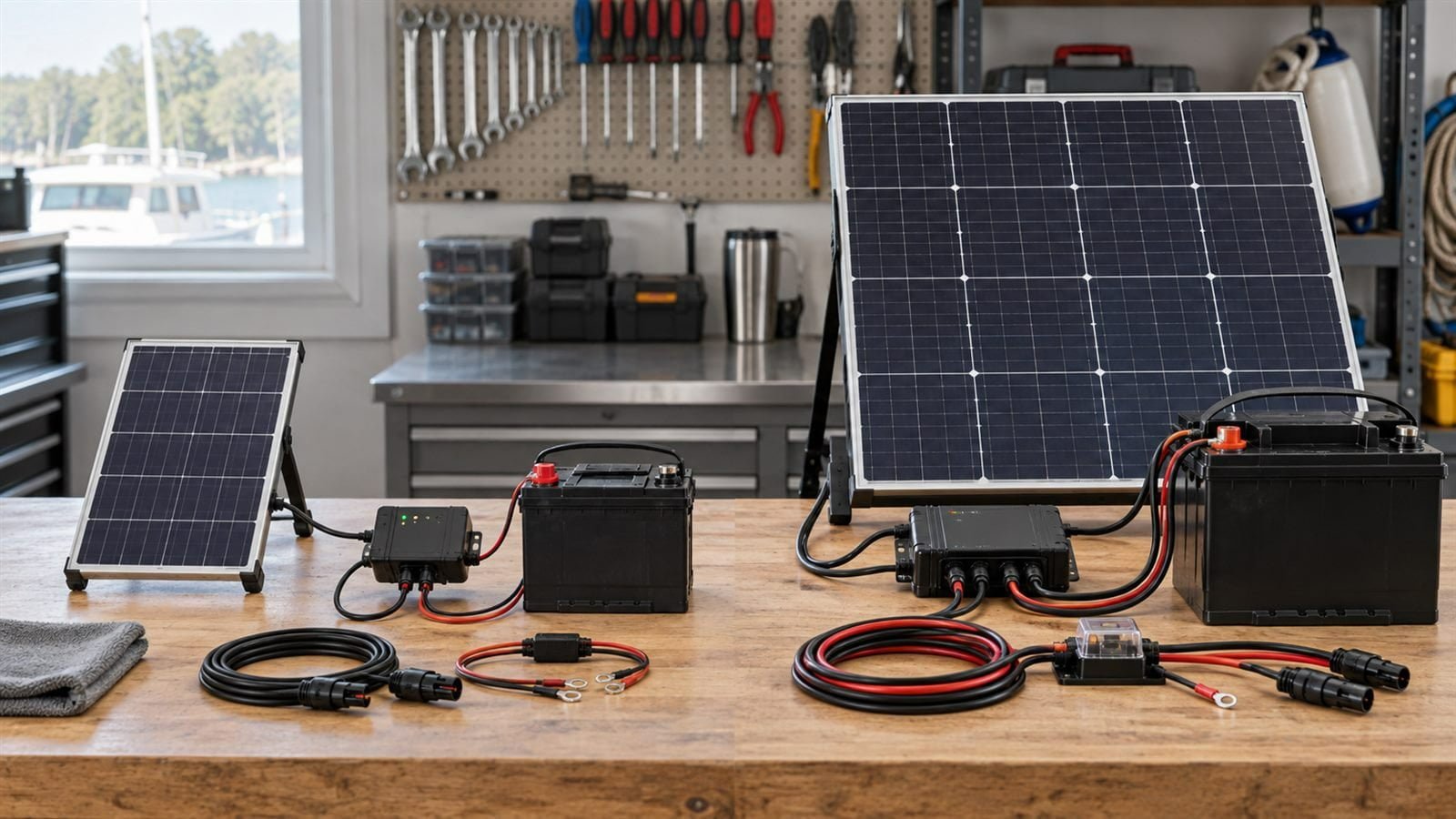
The proposed package should identify the panel, regulator or maintenance electronics, compatible battery types and required protection. A solar panel is not automatically a complete battery maintainer. Confirm how charging is controlled when the battery is full and how reverse current or other relevant conditions are handled.
Review cable length, polarity, routing, strain relief and the complete connector arrangement. If a vehicle socket is proposed, confirm that it remains connected in the parked state and that the vehicle permits charging through it. Do not infer this from the socket’s appearance.
A practical supplier brief
| Information | Why it matters |
|---|---|
| Battery type and vehicle instructions | Defines charging compatibility |
| Measured parked demand | Sets the maintenance energy requirement |
| Parking and lighting pattern | Defines the available solar opportunity |
| Panel location and routing | Reveals shading, heat and cable constraints |
| Longest period without useful light | Identifies when another maintenance method is needed |
| Connection and service responsibility | Prevents an unsuitable installation assumption |
Validate the complete setup during storage
Check battery condition and charging behaviour over representative parked use, including poorer light and the longest expected idle interval. Confirm that the panel stays secure, cables are protected and the installation follows the vehicle and battery instructions. One sunny afternoon is not evidence for an entire storage season.
Our solar battery charger and maintainer options are a starting point for a product enquiry. For the difference between maintenance and active charging, read our maintainer versus charger guide. Share your battery, parked-load and installation requirements so we can review the proposed configuration with you.